

Why Formulators Are Watching This Probiotic Closely
Preclinical data show JBD301 rivals a leading pharmaceutical intervention in weight control — with the clean label your customers want.
Mechanistic proof-of-concept study40
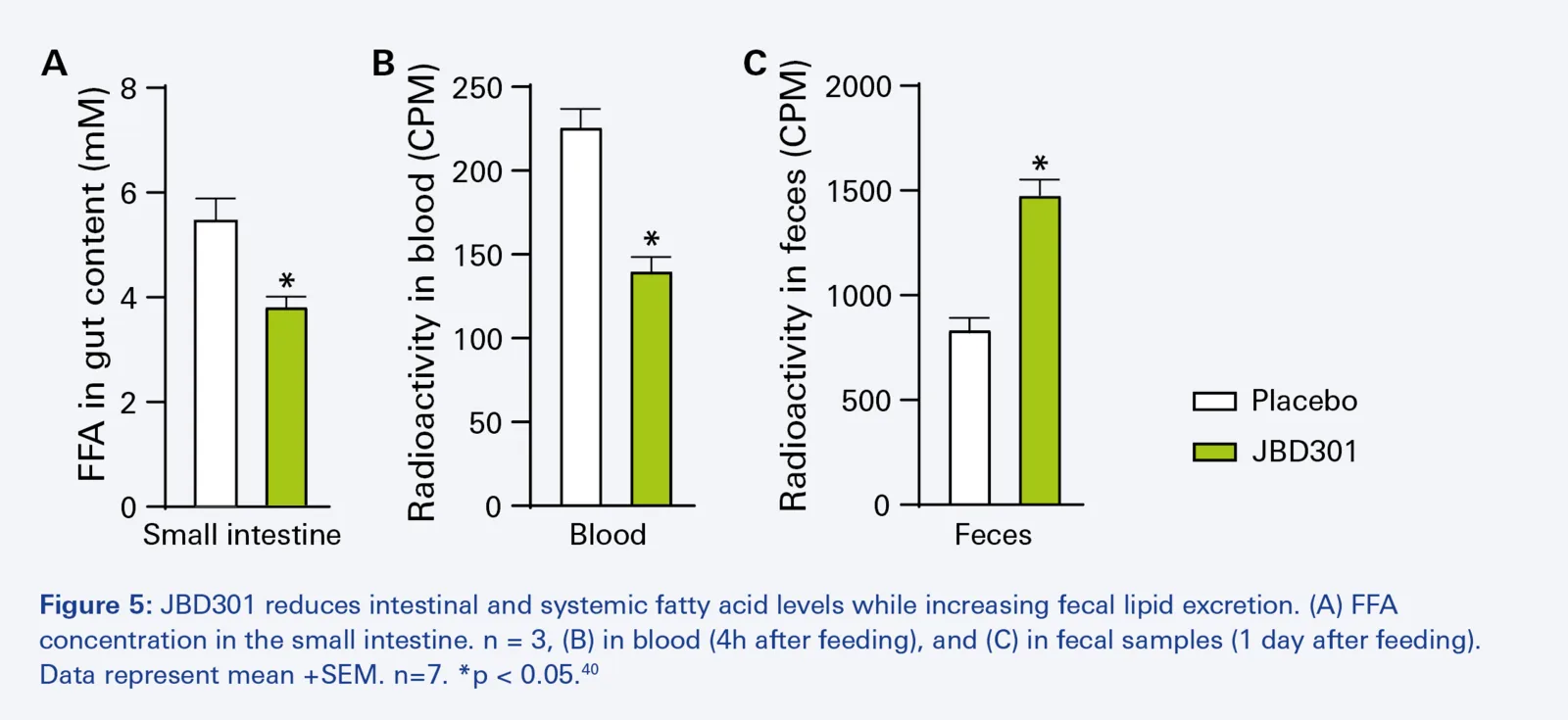
To validate the proposed mechanism of action (the interception of dietary fat absorption by JBD strains), proof-of-concept experiments using a murine model of diet induced obesity (DIO) were performed. Animals received a high-fat diet and were supplemented with either JBD301 or a placebo of three weeks before euthanization and collection of biological samples. For precise tracking of dietary fat absorption into the bloodstream, animals received radiolabeled fatty acids.
The experiments revealed, that FFA concentration was significantly reduced in the small intestinal contents of mice receiving JBD301 compared to placebo controls, indicating decreased availability of dietary lipids for host absorption at the primary site of fat uptake (Fig. 5A). Consistently, the blood analysis demonstrated significantly lower circulating fatty acid levels in the JBD301 group, providing direct evidence that probiotic supplementation reduces systemic fat absorption from the diet (Fig. 5B). Fecal analysis showed significantly elevated FFA in the stool of JBD301-treated animals compared to controls, supporting the proposed elimination pathway (Fig. 5C).40
Impact on body weight, fat accumulation, and metabolic parameters
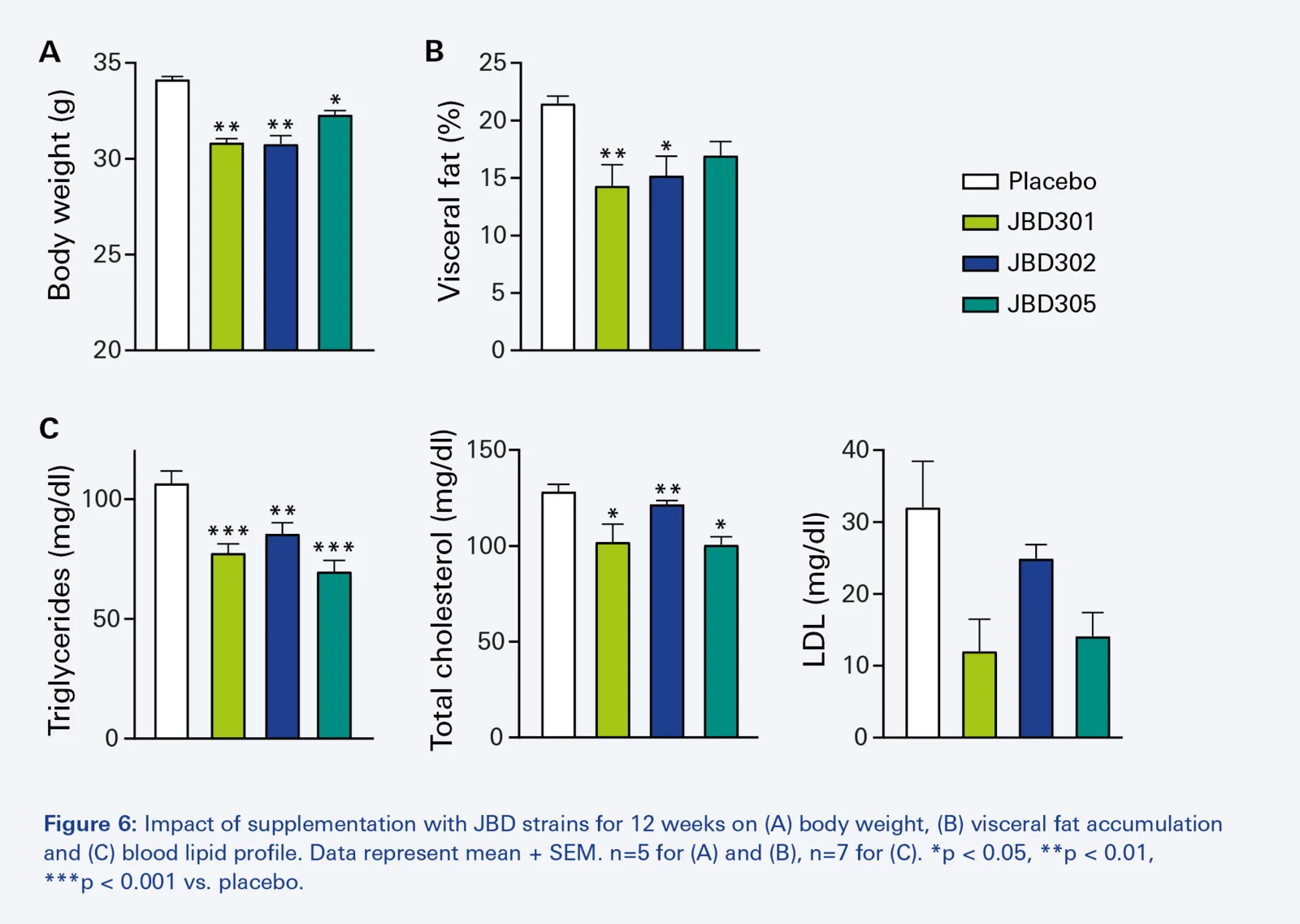
To address the question whether a supplementation with JBD strains results in relevant effects on body weight and metabolic health markers, mice were maintained on a high-fat diet for 12 weeks while receiving daily supplementation with either L. reuteri JBD301, L. plantarum JBD302, L. paracasei JBD305, or placebo. At study termination, the body weight and percentage of visceral fat was determined and metabolic markers were analyzed in the blood.
After 12 weeks, JBD-supplemented animals exhibited significantly lower body weight compared to placebo controls, indicating reduced weight gain during the high-fat feeding period (Fig. 6A). Notably, visceral adipose tissue, the metabolically hazardous fat depot associated with cardiovascular and metabolic disease risk, was significantly reduced in probiotic-treated groups relative to controls (Fig. 6B), confirming that the weight management effect translates to favorable changes in body composition. Plasma lipid analysis revealed significant reduced levels for triglycerides, total cholesterol, and LDL cholesterol in JBD-supplemented animals compared to placebo (Fig. 6C).
Interestingly, strain-specific differences emerged in these outcomes: while all strains demonstrated efficacy, L. paracasei JBD305 exhibited the most pronounced improvements in circulating lipid parameters, despite showing moderate effects on body weight and visceral fat reduction compared to the other strains.
These findings demonstrate that JBD probiotic supplementation not only attenuates diet-induced weight gain and visceral fat accumulation but also improves key cardiovascular risk markers, suggesting multifaceted metabolic benefits beyond simple caloric interception.
Comparative efficacy against an established pharmacological intervention40
To benchmark the weight management potential of the JBD strains against current therapeutic standards, a head-to-head comparison was conducted using orlistat, a clinically approved anti-obesity agent. Orlistat functions as a gastrointestinal lipase inhibitor, preventing enzymatic hydrolysis of dietary triglycerides and thereby reducing fat absorption by approximately 30%. The unabsorbed lipids are subsequently excreted in feces, commonly resulting in steatorrhea—a well-documented and often poorly tolerated adverse effect characterized by excessive fecal fat content.
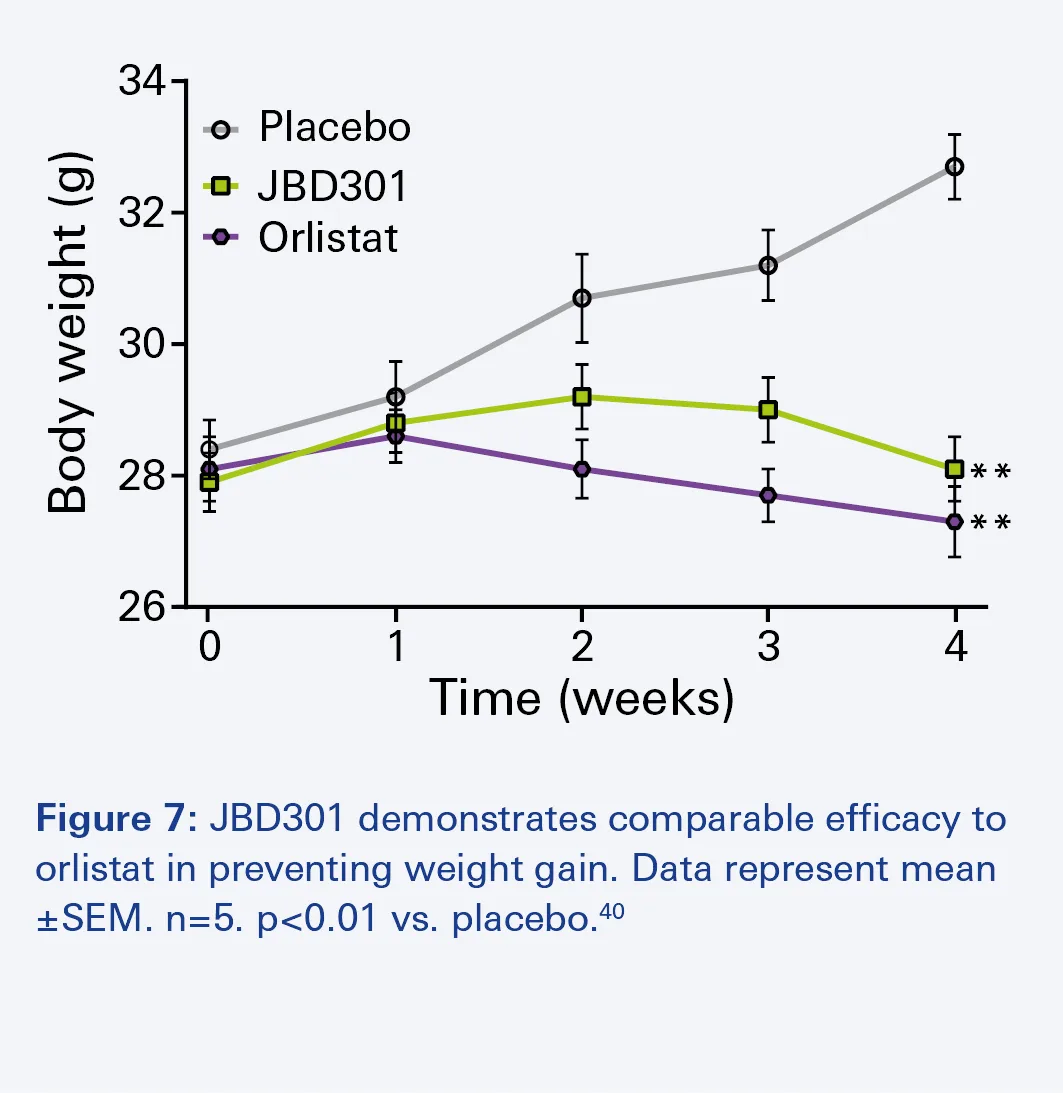
In the experiment, mice were maintained on a high-fat diet for 12 weeks to establish diet-induced obesity, after which they were randomized into three intervention groups while continuing the high-fat regimen for an additional four weeks: JBD301 supplementation, orlistat treatment, or placebo control.
The data analysis revealed, that while placebo-treated animals continued to gain weight during the intervention period, both the JBD301 and orlistat groups roughly maintained their body weight, resulting in significantly lower final body weights compared to placebo controls (Fig. 7).40 Importantly, the magnitude of weight stabilization achieved with JBD301 was comparable to that observed with orlistat, suggesting equivalent efficacy in preventing diet-induced weight gain in this model and propose the JBD probiotic approach as a potentially alternative to pharmacological lipase inhibition.

Sources
- Chung, H.J., Yu, J.G., Lee, I.A., Liu, M.J., Shen, Y.F., Sharma, S.P., Jamal, M.A., Yoo, J.H., Kim, H.J., and Hong, S.T. (2016). Intestinal removal of free fatty acids from hosts by Lactobacilli for the treatment of obesity. FEBS Open Bio 6, 64-76. 10.1002/2211-5463.12024.